.png)
How I Became a Flower Farmer: A Journey Rooted in Love for the Land


When I moved to the little hamlet of Hawkenbury, near Maidstone, back in 2018, I didn’t have the slightest idea that I’d one day become a flower farmer. The plan was simple — downsize, get a smaller house, and find somewhere with a bit of land for my daughter’s horse. It backfired slightly (as plans often do!) because, as it turns out, the only properties with land were the big ones. So, we ended up with a much larger house than expected — but also with three and a half acres to play with.
At first, the land was simply practical. We made hay, cared for the horse, and enjoyed the space. But after COVID, something began to shift. I found myself falling in love with the rhythm of the land — watching the seasons change, seeing the way the soil responded to care and attention. My father’s side of the family were fruit farmers, so I suppose it’s in my blood. I’ve always been happier outdoors than in an office, and after years of working in the corporate world of publishing and travel, I was beginning to feel trapped and frustrated.
The industries I’d worked in were very male-dominated, and I was constantly told, directly or indirectly, that women didn’t often succeed there. One day I took my own advice — if you’re not happy, do something about it. So I left, with no plan in place. Just the knowledge that I wanted something different.
About eighteen months later, I stumbled across the work of a flower grower named Georgie Newbury. I ordered one of her books on starting a flower farm, and something just clicked. I began reading everything I could about sustainable growing, no-dig principles, and how to work with nature rather than against it. I’d already been thinking about the environmental side of things — how we can better use the land we have, how to preserve the planet — and suddenly it made perfect sense. Rather than growing hay for horses, why not create a flower farm?
So in October 2023, the idea began to take shape. We started small, working out which part of the land was best — sheltered but not too wet, because we’re right on the edge of the flood plain near the River Beult. The soil here is heavy clay, and in winter parts of the field can sit under water for weeks. It was all a careful balancing act, and we made our fair share of mistakes (including digging the first beds in completely the wrong direction!).
But step by step, things began to grow. We installed rabbit-proof fencing, created new beds, moved more than 18-tonnes of compost and eventually built a polytunnel in 2024. In 2025, I was lucky enough to receive a grant from Growing Green, a Medway Council initiative that supports small sustainable businesses. The funding allowed us to install an irrigation system — which turned out to be a complete lifesaver. By spring 2025, we’d run out of water completely and were heading into drought. Without that irrigation, I honestly don’t think the farm would have survived the season.
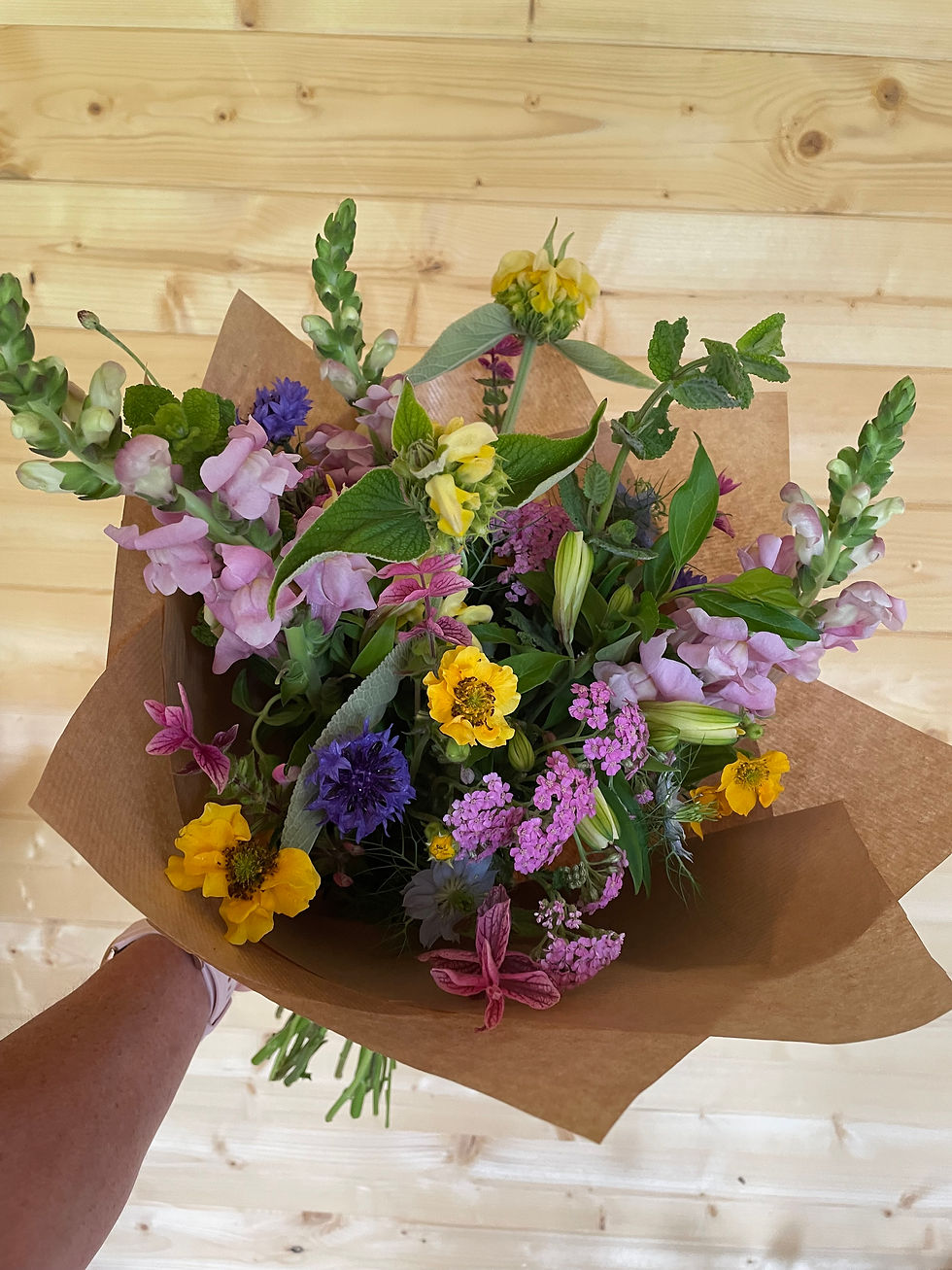
Now, standing here and looking out over the beds — 22 of them and counting — I sometimes can’t quite believe how far things have come. What began as a way to make better use of a bit of land has turned into something so much more meaningful: a sustainable flower farm that brings joy, nurtures wildlife, and connects me with a community of people who care deeply about nature and beauty in the everyday.
Becoming a flower farmer wasn’t part of the plan — but it’s the best decision I’ve ever made.


A beautiful and inspiring story keep up the amazing work!